The secret he took to his grave
In the wild Northern Territory of Australia, around 300 km north of Alice Springs, two British backpackers enjoy the stunning views. Peter Falconi and Joanna Lees are taking it all in.
A white Toyota approached from the opposite direction, flashing its lights. They pull over. Their first mistake. Bradley Murdoch, the male driver, said he saw sparks from the exhaust. Peter walked around the van while Joanne got into the driver’s seat, ready to start the engine.
She heard a gunshot and never saw her boyfriend again. Tied with cable ties and her head covered, Lees feared for her own life as she was dragged into the bush. For over five hours, she hid from him and his dog in the bush, avoiding them until she flagged down a passing truck.
The crime
The Northern Territory has seen many people go missing under strange circumstances. This case was no different. Like Azaria Chamberlain, whom I wrote about last year, this case is also shrouded in mystery.
It brings to mind the odd stabbing of Frenchman Phillipe Jegouzo, about 100 km north of Alice Springs.
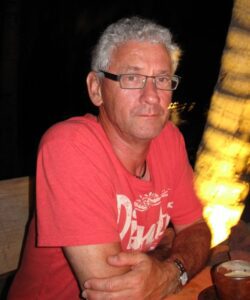
Murdoch, who shot Falconio in 2001, died last week at 67 from throat cancer. He was convicted of murder and attempted kidnapping in 2005. He received a life sentence with a 28-year non-parole period.
Twenty-four years after the murder, Falconi’s body has still not been found. He took the spot where he hid Falconi’s body to his grave. This left his heartbroken parents behind.
Six months after the murder, there were 2,500 persons of interest. At this point, an anonymous letter was sent to the Northern Territory Times. The letter said Murdoch called a criminal friend to help get rid of Falconio’s body.
The letter states Murdoch had cut the body up and put it in two large bags, both watertight and smell-proof. He told (the associate) to take it back to Perth, dissolve the body parts in acid, and dump what was left in Perth’s Swan River.
Other reports say the killer put Falconio’s body in his vehicle. Then, he dumped it somewhere between Alice Springs and Broome. This distance is nearly 1,700 kilometers.
Police tried on multiple occasions to locate his body. Desperate to find the body, police raised the reward for information to $500,000. However, this did not lead to any useful tips. Nor was the letter ever substantiated by Murdoch or the letter’s author.
A simple but vital clue
Murdoch knew the police were onto him. He panicked and escaped to the bush. He was an expert at disguises and not being found. He also knew the bush like the back of his hand. Police arrested Murdoch linked to a different rape case. This case involves a mother and daughter from South Australia. This happened after a long manhunt when he disappeared. This allowed police to collect his DNA.
Murdoch’s DNA matched samples from Lee’s shirt, the van’s gearstick, and the hand restraints. This evidence clearly put him at the scene.
A detailed search of the items from Murdoch’s car and trailer revealed one common object: an elastic hair tie. The hair tie was wrapped around his holster inside his belongings.
The forensic scientist found that the bloodstain on Ms. Lee’s shirt was “at least 150 quadrillion times” more likely to be Murdoch’s than anyone else’s. This evidence, along with the DNA testing and hair samples from the hair tie, was enough for a conviction.
What sort of a man does this
Most people know Bradley Murdoch only for his 2005 conviction. He has always denied responsibility for the crime, from his arrest until his death.
Those who knew him described him as a devoted father, father-in-law, and proud grandfather. He always found a way to brag about his grandchildren. He was a beloved brother, uncle, and friend.
Murdoch spent most of his life working as a mechanic. He had a history of violent crime. In the mid-1990s, he went to jail in Western Australia. This was for shooting at Aboriginal football fans. He was also thought to be a drug runner.
He was also described as psychopathic. At first, he seemed charming, but he was deeply violent. He also had a methamphetamine addiction.
Two subsequent appeals by Murdoch were denied. In 2016, the Northern Territory passed ‘No body, no parole’ laws. They hoped this would encourage him to confess.
It’s tough to find any morality when a man denies Falconi’s family the closure they need after a brutal, unprovoked murder. It’s even less clear when the police, wanting to close this part of the case, likely offered a bail deal for the information. If this man were a loving father and father-in-law, wouldn’t he feel sympathy, remorse, or empathy for what he did?
Or was he simply one of those people who are born bad to the bone and never change? We will never know.
What I do know is that somebody that exhibits this sort of behaviour, really doesn’t go close to passing the ethical behaviour test.
Till next time,
Calvin